
INTRODUCTION TO GAMING
Task 1 Research
Brief History of video games
1980's - Today
The beginning of the 1980s was considered as the Golden Age. When Ray Kassar replaced Bushnell as president of Atari Industry (an engineering company) he wanted to push existing ideas to their fullest rather than to develop new technologies. Al Alcorn, an American pioneering engineer and computer scientist best known for creating Pong, wanted to begin the new generation of home video game hardware, but Kassar didn’t want to consider an alternative to VCS, the first successful video game console.
Later on Alcorn used mylar technology to create an impressive array of 3D holographic overlays for the Cosmos. One of the first game created for this system was similar to Steve Russell’s Spacewar. Spacewar includes two spaceships against each other, both orbiting a central star (Bramdom Russell, 2013).
In 1978, Cinematronics released Space Wars a coin operated arcade version of Steve Russell’s computer game. Rosenthal created a processor powerful and economical enough to run a full-scale version of the PDP Computer classic in an arcade machine. His vector graphic technology gave him several advantages over designers using raster scan screens. With these vector graphics it enabled designers to create elaborate line art with stark contrast. This new look helped change the old look of raster-scan games which had crude shapes. Early vector graphics hardware could not generate colours, but other companies placed coloured plastic overlays on their game to give out the illusion of colour.


In 1981 Cinematronics released Tail Gunner the first video game to feature 3D animated objects. Tail Gunner was played from the first-person perspective. This was something new to the gaming industries especially introducing 3D animated objects.
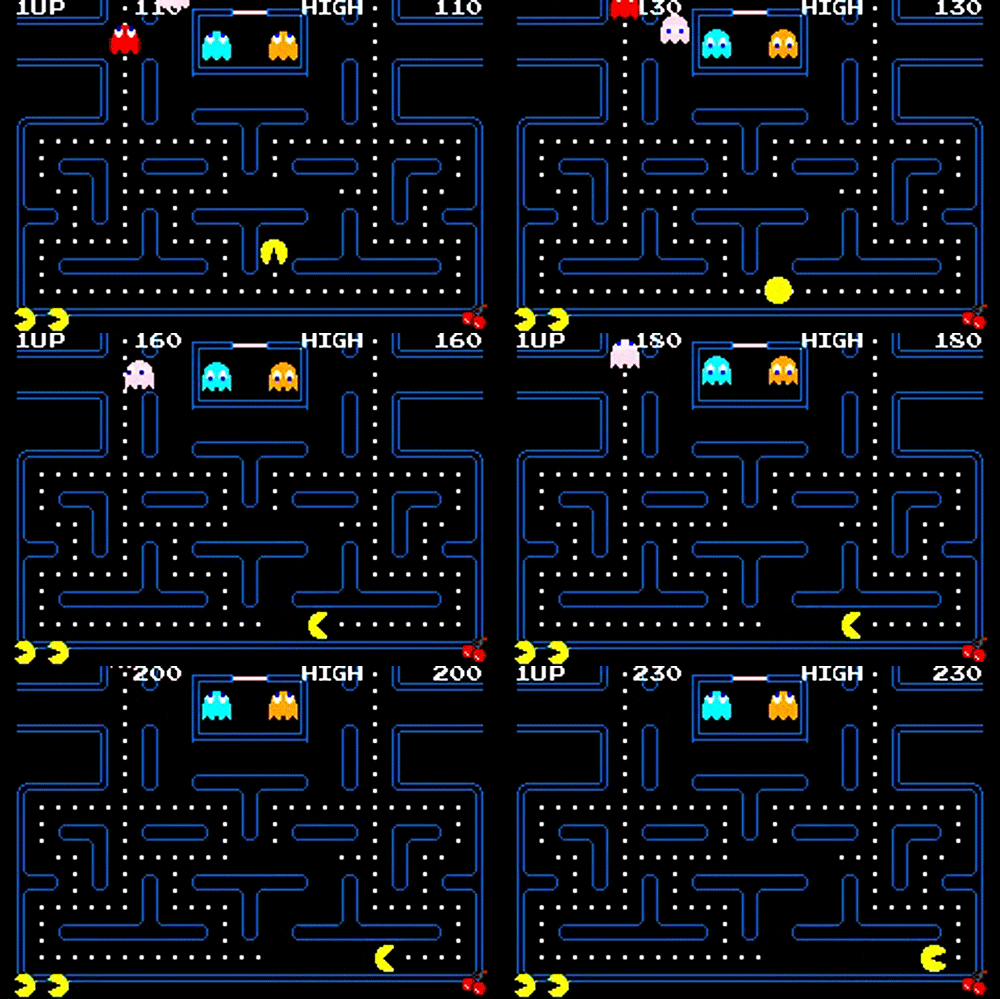

The most famous game that was released during the 1980s by far is Pac-Man. Pac-Man was invented by Toru Iwatani, a young pinball enthusiast who joined Namco shortly after graduating from college in 1977. Iwatani wanted to create pinball machines but Namico only produced video games. He created digital pin-ball games but in 1979 he wanted to try to do something different, something female players might enjoy. Pac-Man was based around the Japanese word taberu, meaning “to eat”. The final game was very simple, including a joystick to guide the Pac-Man. Originally Pac-Man was going to be named Puck-Man due to the puck like shape that the main character has but Nakamura was worried about vandals changing the ‘P’ to an ‘F’.
The video-game business became very popular and arcades grew to be as common as convenience stores. Grocery stores places video games near their entrances, hotels replaced gift shops with arcades and some doctor offices also put video games in their waiting rooms.
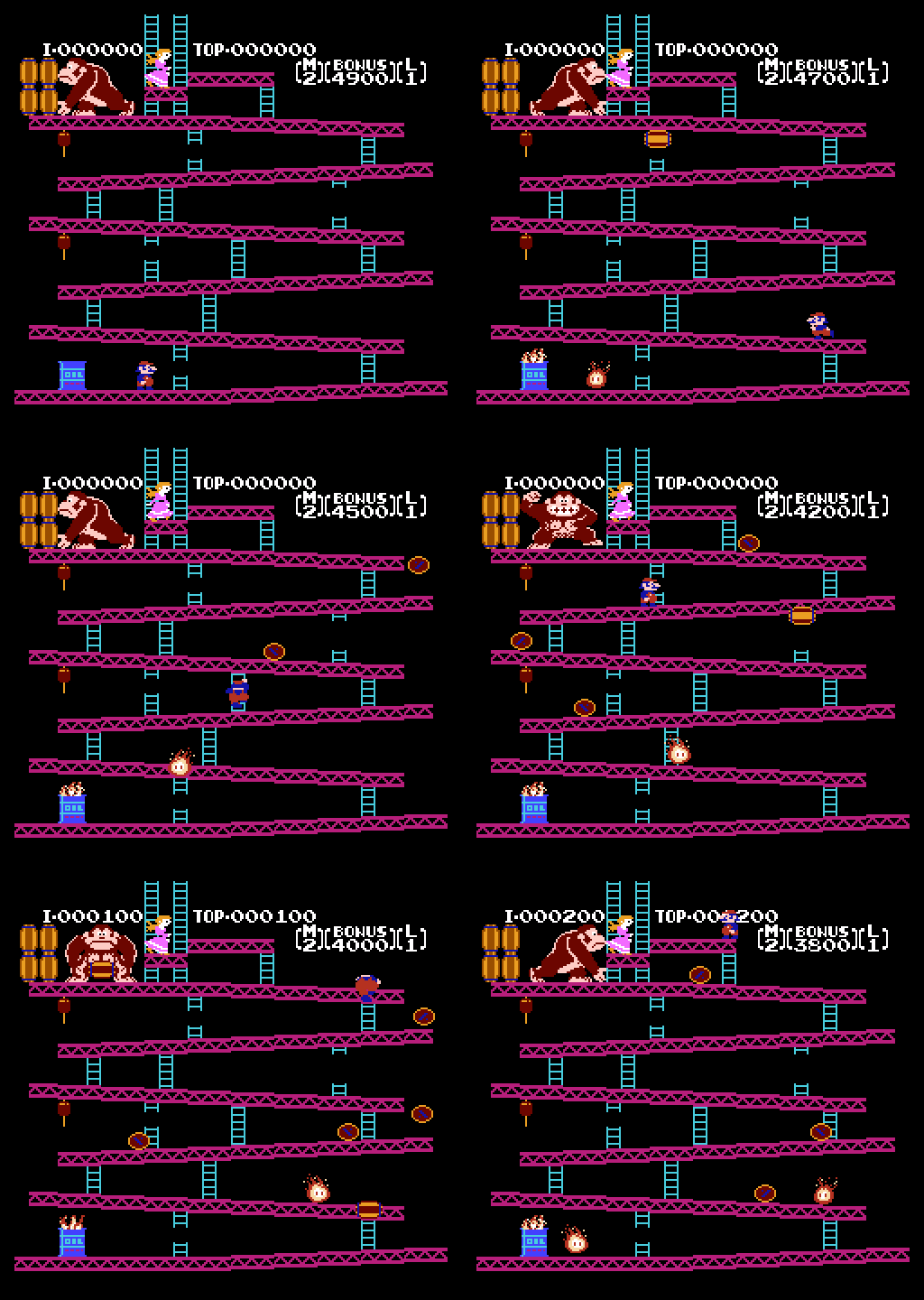

Before Mario became popular, he was called ‘Jumpman’. Americans first encountered him in 1981. Jumpan’s best friend was his pet gorilla named ‘Donkey Kong’. ‘Donkey Kong’ had turned on his owner and kidnapped his girlfriend and taken her hostage at the top of towering steel beams of a construction site. ‘Donkey Kong’ was a hit and was also a mile stone in video game history. It was the first so called platform game and the first game to have substantial narrative. ‘Donkey Kong’ was the beginning of the ‘Mario Brothers’ and their series of video games.

Sega was a company founded in 1940 and based in Honolulu in Hawaii. They relocated to Tokyo in 1951 and after merging with another arcade manufacture (Rosen Enterprises) in 1965, they called themselves SEGA. The name is originated from the first two letters of the words Service Games. Sega released their first console in 1983. Their best release (and iconic game) was Sonic the Hedgehog 2 that was released later on. Sega was the first to give their games classification so they could release more violent games.

During the late 1980s, video game companies started to create new hardware where games can be played outside of the arcade room. Devices such as the Game Boy created by Nintendo, released in 1989, was a handheld video game console that contained an 8-bit Z8o processor with a monochrome LCD display and 4-channel stereo sound. Shortly after the introduction of the Game Boy, Sega and Atari released handheld games, the Sega Game Gear and the Atari Lynx. Both had superior colour LCD displays but both also suffered from short battery life and limited game availability. All original Game Boys were bundled with Tetris (a game created by Russian mathematician Alexey Pazhitnov assisted by Dmitry Pavlovsky and Vadim Gerasimov.). Games were stored on removable cartridges, allowing users to switch from different games.

The 16 bit era started with the Mega Drive, a fourth-generation video game console, which was released in 1988 in Japan, 1989 in North America (where it was renamed the 'Genesis', as Mega Drive was already copyrighted) and 1990 in the PAL regions. It was originally launched to compete with Nintendo Entertainment System and NEC’s PC-Engine. Two years later, Nintendo released the Super Nintendo Entertainment System, and the competition between the two would dominate the 16-bit era of video gaming.
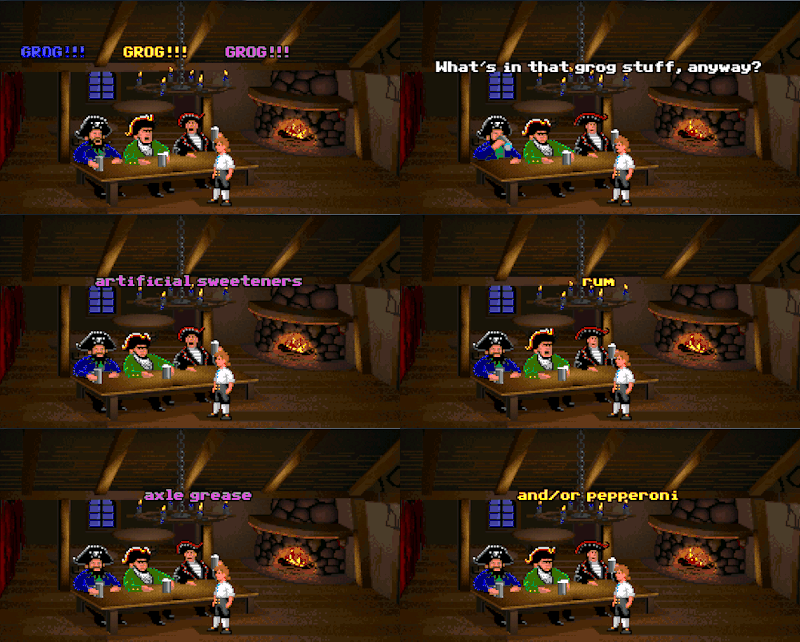
Adventure games started to benefit from enhanced visuals due to the new 16-bit. Games that worked around point and click had a better advantage now that they can add detail to the scenes. An example of such point and click is ‘The Secret of Monkey Island’ made by LUCASFILM in 1990. In 1991 ‘Sonic the Hedgehog’ became an iconic platformer especially due to its amazing graphics that are still impressive till today.
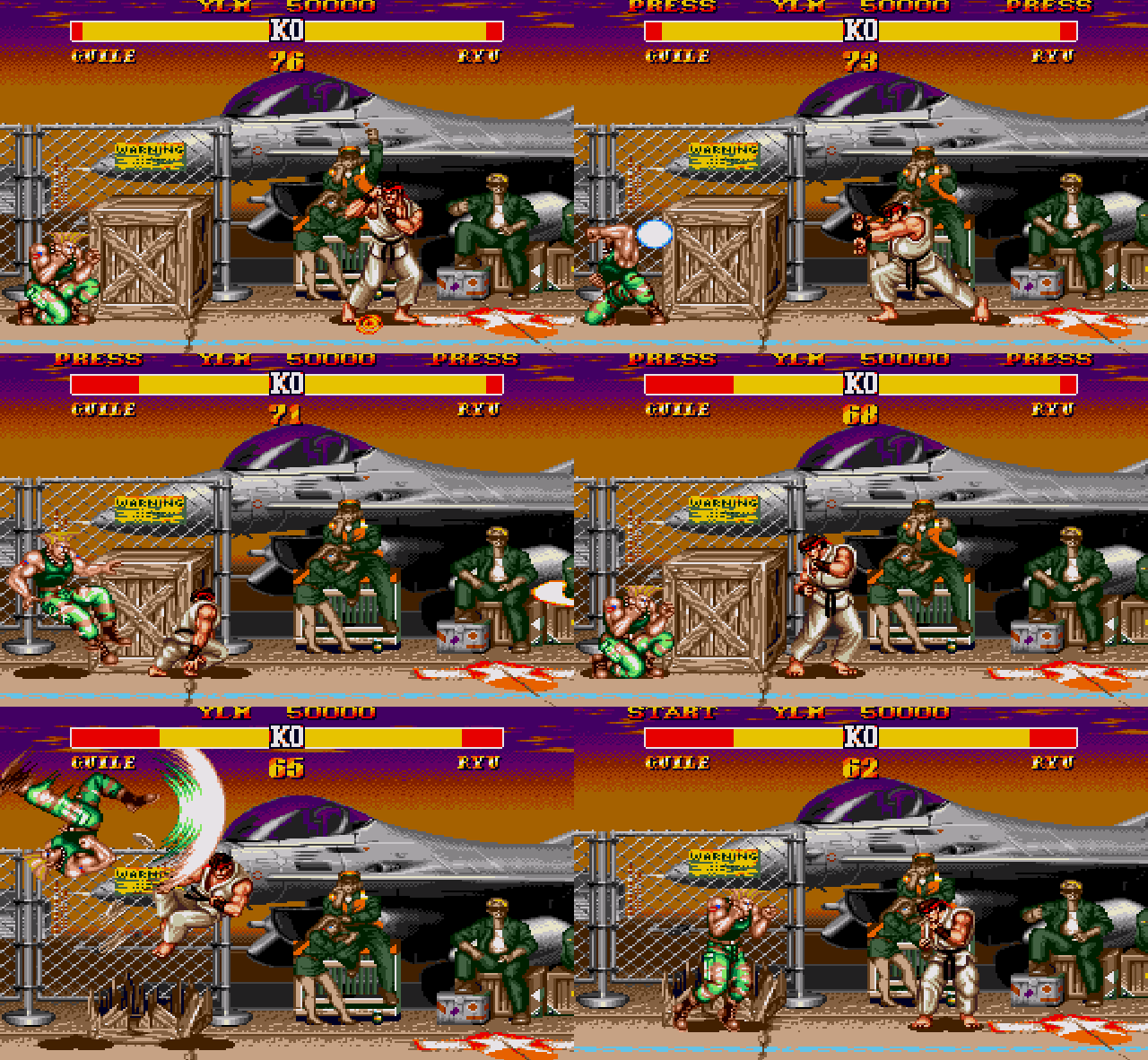
During the 1990s a lot of types of genres of games started to blossom. ‘Streetfighter 2’, created by CAPCOM in 1991, was the original fighting game that sent popularity throughout fighting game. This game led up to games such as “Mortal Kombat” that was released by Acclaim Entertainment in 1992. Shooting FPS (First person shooting) games started to become popular after the game ‘Wolfenstein 3D’ was released in 1992. 1993’s ‘Doom’, created by id in 1993, is another example of an FPS with high action and gore filled gameplay.

The 32 bit PlayStation launched in 1994, and this new console provided the basis for ‘Tekken’, a fighting game. ‘Tekken’ was based on Sega’s ‘Virtua Fighter’ which was launched in 1993. ‘Tekken’ was created by Namco in 1994 and it introduced a different kind of presentation than normal fighting games. Namco made sure to refine the presentation as well as the controls.


In 1996 Nintendo 64 came out and was very successful. The first game creator for Nintendo 64 was ‘Super Mario 64’ launched in 1996. Nintendo 64 had the power to support 3D and had a joypad with analogue precision. 1996 was also the year that Game Boy released ‘Pokemon Red/Blue’, a pocket sized RPG. Survival horror games also started to show up during this game. An example of the first survival horror game is ‘Resident Evil’.

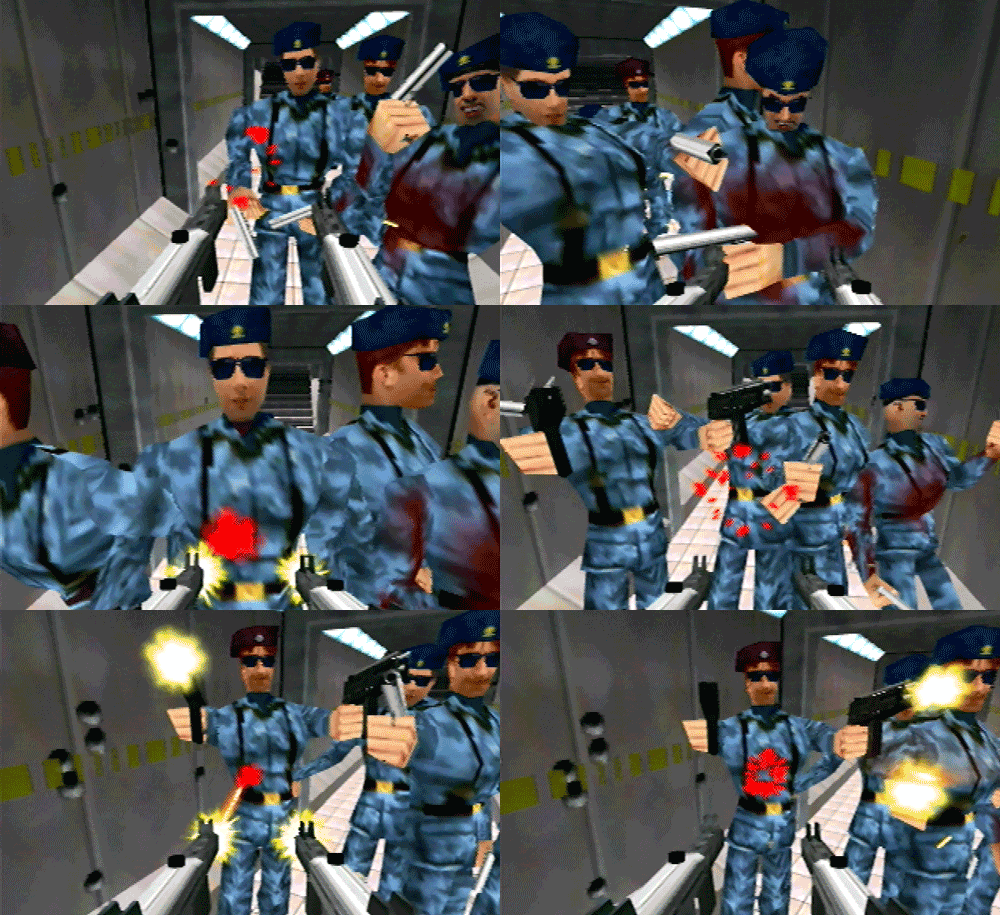

The first successful FPS came out in 1997. ‘GoldenEye 007’ was based on the 1995 James Bond film Golden Eye and was developed by Rare. The racing sim genre started to become popular during the same time. An example of this is ‘Gran Turismo’, developed by SONY in 1997. ‘Grand Theft Auto’, a very popular game that is still produced today, was first released in 1997 and produced by DMA Design. This first version of GTA was a top-down open world in which larceny and murder are common currency.


An important milestone for the RTS genre is Blizzard’s ‘StarCraft’ developed in 1998. ‘StarCraft’ is an alteration of ‘Warcraft’ in a futuristic setting with 3-race interplay. Adventure games started to become declined in the late 90’s. 1999 was when FPS shooters were blossoming. By this point in the years, 3D graphics were starting to mature. Examples of such games during 1999 are ‘Counter Strike’, ‘Unreal Tournament’ and ‘Quake 3 Arena’.
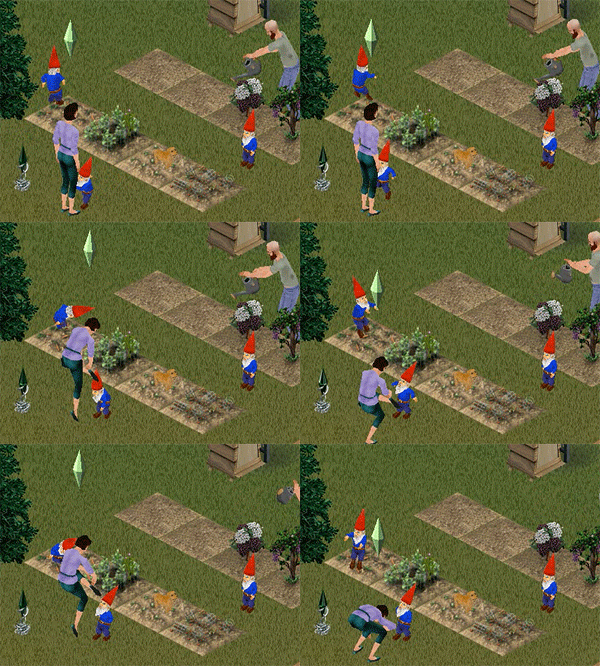
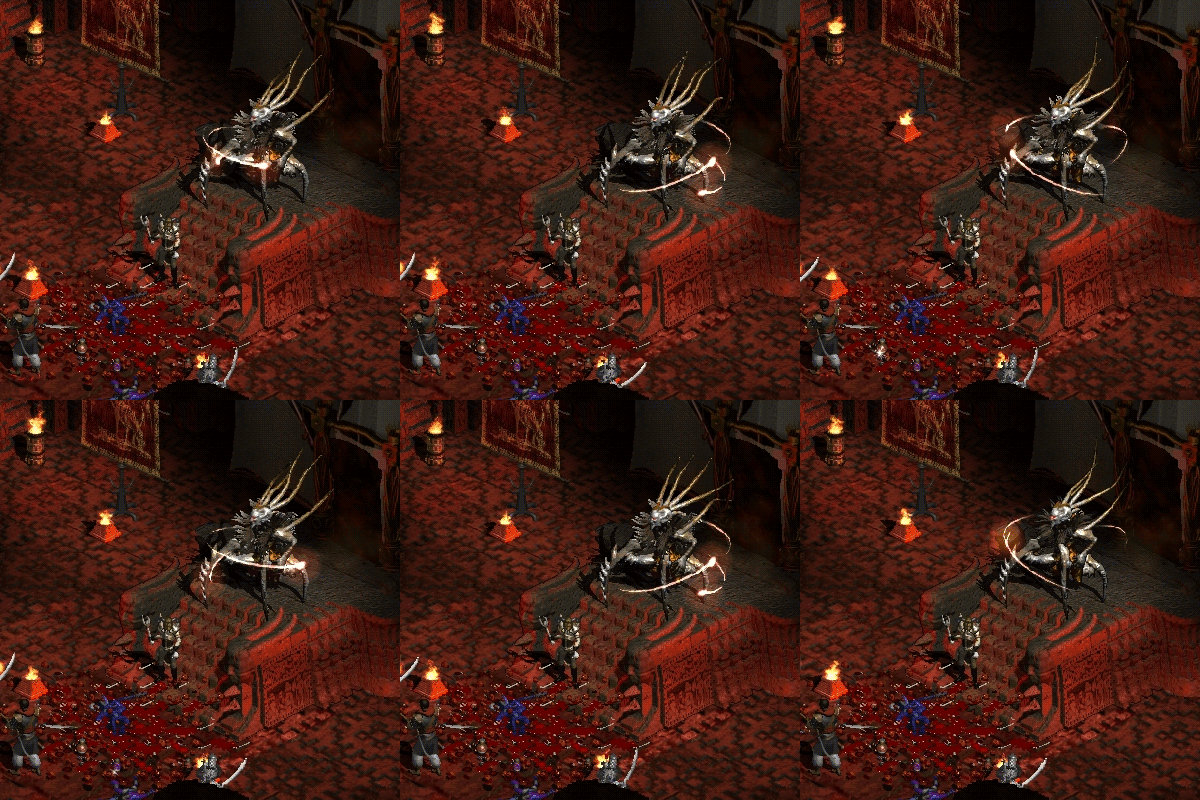
The new millennium (2000) was the year where Play Station 2 and Gamecube launched. During the 2000’s, more pc games started to develop. An example of such games is ‘Diablo II’ (created by Blizzard) an action role-playing hack and slash video game. Simulation games such as ‘The Sims’ created my MAXIS had a universal appeal to everyone and had kept it over the years. In the 2000s games like ‘Grand Theft Auto’ started to develop and new franchises such as ‘Halo’ and ‘Call of Duty’ were being produced.


The start of the seventh generation started with the launch of XBOX 360 in 2006, and in the same year launched ‘Gears of War’ by Epic. Nintendo also produced the Wii during 2006 and competed against XBOX 360. Wii introduced the concept of motion controls which was later on added to Xbox Kinect. FPS games took a wild turn during 2007 and multiplayer influenced many other games.

‘Minecraft’ was released as a first public alpha during 2009. Even though Minecraft didn’t have all of the amazing graphics and was very simple, it included different world generation and an addition of multiplayer.‘The Elder Scrolls: Skyrim’ had a heavy impact of gaming pop culture.
Overall gaming evolved quite heavily, hardware wise and graphic wise. The incorporation of multiplayer and different genres of games have been evolving and are still evolving. New hardware for video games such as the VR created by Sony is still being developed and I can’t wait to see what the future beholds.
References
-
Ahoy. (2018). A Brief History of Video Games. [online] Available at: https://youtu.be/GoyGlyrYb9c [Accessed 28 Mar. 2018].
-
History, T. (2018). Sega 16-Bit Mega Drive II - Computing History. [online] Computinghistory.org.uk. Available at: http://www.computinghistory.org.uk/det/15476/Sega-16-Bit-Mega-Drive-II/ [Accessed 28 Mar. 2018].
-
Kent, S. (2010). Ultimate History of Video Games. Three Rivers Press.
-
Kohler, C., Kohler, C., Watercutter, A., Griffith, E., Myers, B. and Pickett, M. (2018). How Pong and the Odyssey Console Launched the Videogame Era. [online] WIRED. Available at: https://www.wired.com/2015/01/ralph-baer-al-alcorn-pioneer-award-dice/ [Accessed 28 Mar. 2018].
-
National Museum of American History. (2018). Game Boy. [online] Available at: http://americanhistory.si.edu/collections/search/object/nmah_1253117 [Accessed 28 Mar. 2018].
-
The Sydney Morning Herald. (2018). Your Turn: A brief history of Sega. [online] Available at: https://www.smh.com.au/technology/your-turn-a-brief-history-of-sega-20130808-2rkfm.html [Accessed 28 Mar. 2018].
-
The Verge. (2018). 'Spacewar!' The story of the world's first digital video game. [online] Available at: https://www.theverge.com/2013/2/4/3949524/the-story-of-the-worlds-first-digital-video-game [Accessed 28 Mar. 2018].
-
Time. (2018). How Donkey Kong and Mario Changed the World. [online] Available at: http://time.com/3901489/donkey-kong-anniversary/ [Accessed 28 Mar. 2018].